
The main types of commercial flooring are terrazzo, tile, stone, polished concrete, resilient flooring, and carpet. Each has its own strengths: terrazzo, tile, and natural stone are premium finishes built for long service in demanding public spaces, polished concrete makes a durable floor of the slab itself, and resilient flooring and carpet bring comfort and acoustic performance where those matter most. Matching material to the demands of each space, rather than choosing one floor throughout, is how commercial projects get this right.
Most commercial buildings use several flooring materials, and the reasoning behind each choice differs by space. A lobby, a locker room, a patient corridor, and a warehouse have almost nothing in common in what they ask of a floor.
This guide covers the main categories, what each does well, and where each fits.
Comparison at a glance
| Material | Seamless | Design range | Maintenance | Replacement cycle |
|---|---|---|---|---|
| Terrazzo | Yes | Very wide, custom color and inlays | Low | None, refinished in place |
| Tile | No, grout joints | Very wide material, color and texture range | Low, possible grout upkeep | None, can stay in place as long as design trends allow |
| Natural stone | No, grout joints | Very wide material, color and texture range | Low to moderate, possible grout upkeep and occasional stone treatment | None, refinished in place |
| Polished concrete | Yes | Limited, reveals the slab | Low | None, refinished in place |
| Resilient and LVT | Welded or butted seams | Wide, printed patterns | Moderate | Periodic replacement |
| Carpet tile | Seams throughout | Very wide | Higher, regular cleaning | Periodic replacement |
Terrazzo
A composite of marble, quartz, granite, or glass chips in an epoxy or cement binder, poured over a prepared slab and then ground and polished.
Strengths: seamless with no grout joints, extremely long service life, very low maintenance, and a very wide design range, including custom colors, patterns, logos, and wayfinding built into the surface. Refinished rather than replaced.
Considerations: higher installed cost than most finishes, and it requires a specialist contractor. Routine care is modest but not optional, and maintenance guidance is worth following from day one.
Where it fits: lobbies, main circulation, concourses, and any high-traffic public space in a building meant to last. The terrazzo systems available vary by thickness and structural requirement, so the system is matched to the building rather than assumed.
Tile
Ceramic, porcelain, glass, and mosaic tile, set over a prepared substrate.
Strengths: excellent moisture resistance, a very wide range of materials, colors, and textures, low maintenance, and a service life that can run as long as the design stays current.
Considerations: grout joints may need periodic upkeep. Installation quality is decisive, so substrate preparation, mortar coverage, and movement joints should follow industry standards. Tile should be specified to ANSI A137.1 as a whole. Slip resistance, measured as DCOF, is one of its requirements, not the only one.
Where it fits: restrooms, wet areas, locker rooms, natatoriums, food service, and guest bathrooms, including healthcare environments with demanding cleaning protocols.
Natural stone
Granite, marble, limestone, slate, and other quarried materials, cut and set.
Strengths: a very wide range of materials, colors, and textures, natural character that is unique to each stone, and very long service life with refinishing in place.
Considerations: weight and natural variation between pieces are planned for in design. Care varies by stone type and may include grout upkeep and occasional stone treatment.
Where it fits: signature lobbies, feature areas, facades, and spaces where material quality is the design point.
Polished concrete
The existing slab, mechanically ground, honed, and polished with progressively finer bonded abrasives.
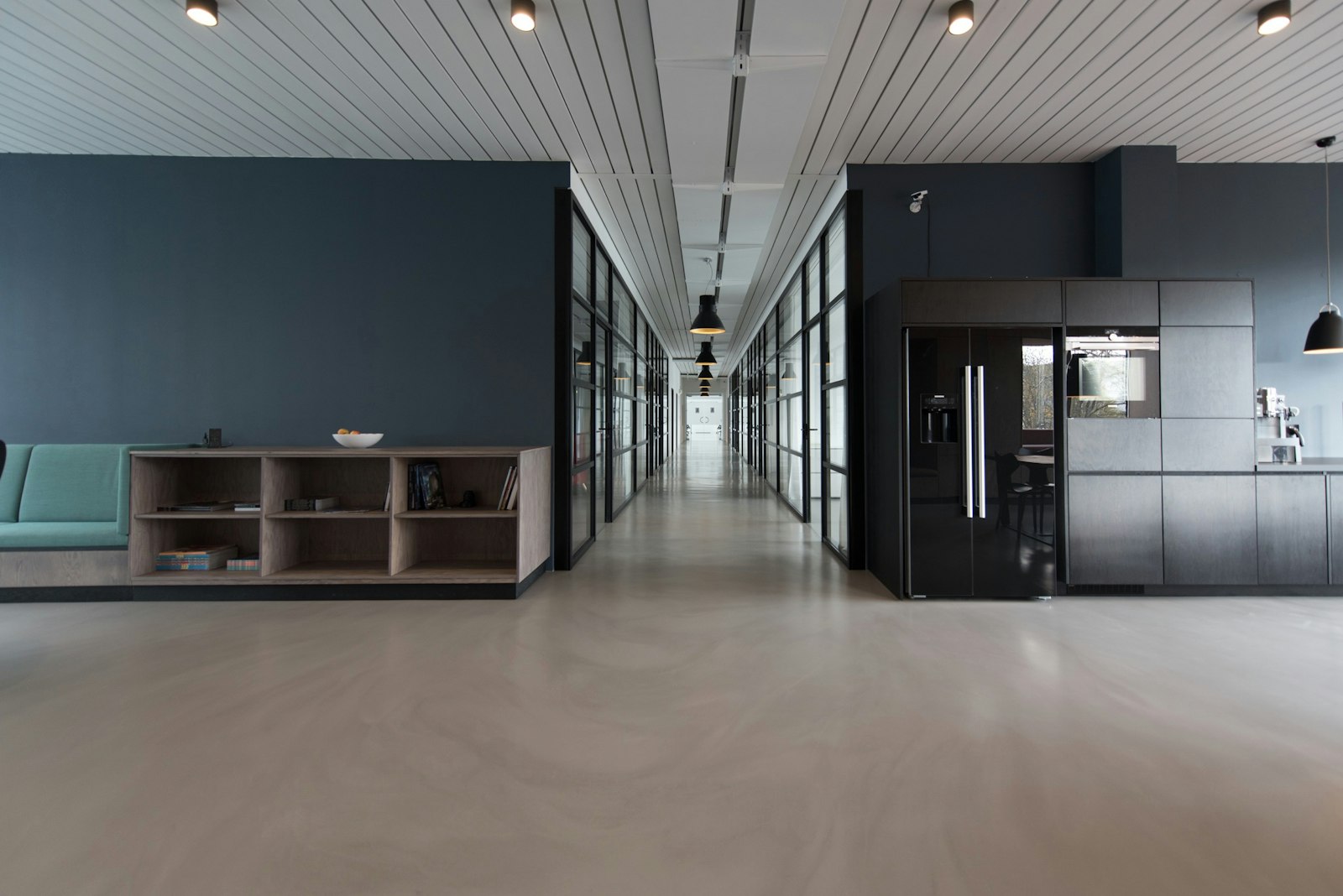
Strengths: lowest installed cost of the durable options, since no finish material is added. Seamless, very hard, and refinished in place rather than replaced.
Considerations: limited color and pattern control, and the finished appearance depends heavily on the condition and character of the existing slab. Repairs and placement variations remain visible.
Where it fits: warehouses, back-of-house, retail with an industrial aesthetic, service corridors, and open floor plates. For a direct comparison, see terrazzo versus polished concrete and what drives polished concrete cost.
Resilient flooring and LVT
Sheet vinyl, luxury vinyl tile, rubber, and linoleum.
Strengths: lower installed cost, comfort underfoot, acoustic performance better than hard surfaces, wide range of printed patterns, and fast installation.
Considerations: it is replaced at the end of its service life rather than refinished, and it is best matched to spaces without heavy rolling loads or standing moisture.
Where it fits: patient rooms, classrooms, offices, and spaces where comfort and acoustics matter more than resistance to rolling loads.
Carpet and carpet tile
Broadloom and modular carpet tile.
Strengths: the best acoustic absorption of any flooring category, comfort, warmth, and very wide design range. Carpet tile allows damaged areas to be swapped individually.
Considerations: it needs regular cleaning and is replaced more often than hard surfaces, so it is best used where comfort and acoustics are the priority.
Where it fits: offices, guest rooms, holdrooms and lounges, conference spaces, and anywhere acoustic comfort is a priority.
How to choose
Three questions settle most decisions.
How long will you hold the building? For institutions planning in decades, replacement cycles dominate the cost picture. Facility planners weigh this using life cycle cost analysis, the total cost of owning a building element rather than its purchase price, supported by tools such as the federal building life cycle cost programs maintained by the National Institute of Standards and Technology. The longer the horizon, the more durable materials win.
What does the space actually demand? Moisture, rolling loads, acoustics, slip resistance, and cleaning protocols vary enormously between spaces in the same building. Matching material to demand beats selecting one floor throughout.
How disruptive is replacement? In hospitals, airports, schools, and hotels, taking a space out of service carries costs that never appear on a flooring bid. Where disruption is expensive, materials that are refinished rather than replaced are worth more than their installed price suggests.
Commercial flooring from David Allen Company
David Allen Company installs terrazzo, tile, stone, underlayment, carpet and resilient flooring, and polished concrete for commercial, institutional, and government projects. Our terrazzo teams have earned more National Terrazzo and Mosaic Association Honor Awards for quality workmanship than all other terrazzo contractors in the Southeast combined, with more than 50 million square feet of terrazzo installed and a comparable record in tile.
Because most projects use several materials, having one contractor across multiple scopes keeps transitions, sequencing, and finish quality consistent rather than split across subcontractors.
Frequently asked questions
What is the most durable commercial flooring?
Terrazzo, tile, natural stone, and polished concrete all offer very long service lives when installed correctly. Terrazzo, natural stone, and polished concrete can also be refinished in place.
What is the lowest maintenance commercial flooring?
Terrazzo, tile, and polished concrete are all low-maintenance floors that need routine cleaning rather than stripping and waxing. Tile and natural stone may also need occasional grout upkeep.
Which commercial flooring is cheapest?
Carpet and resilient flooring generally cost least to install. The right comparison depends on how long the building will be held and what each space demands.
Should a building use one flooring type throughout?
Rarely. Different spaces have different requirements for moisture, acoustics, slip resistance, and traffic. Most commercial projects use several materials matched to the demands of each area.
What flooring is best for high-traffic areas?
Hard-wearing materials such as terrazzo, tile, natural stone, and polished concrete are all used in high-traffic areas. The choice depends on rolling loads, moisture, and the design intent of the space.