
Commercial polished concrete works best in buildings with a sound, reasonably flat slab, open floor plans, and an appetite for an industrial look. It excels under forklift and rolling traffic, costs less to install than most finish flooring, and is refinished in place rather than replaced. It is a poor fit where the slab is badly damaged, where design calls for specific colors and patterns, or where acoustic comfort matters more than durability.
Polished concrete has moved well beyond warehouses. It now turns up in offices, schools, healthcare support spaces, retail, and hospitality, chosen for a hard, seamless, low maintenance floor that adds no separate material to the building.
That expansion has also produced a fair number of disappointed owners. Polished concrete is not universally appropriate, and the difference between a good outcome and a bad one is usually decided before anyone picks up a grinder.
Here is an honest look at where it belongs.
What the slab decides
Polished concrete is the slab, refined. That is the whole proposition, and it is also the main constraint.
A well placed, sound, reasonably flat slab polishes efficiently and predictably. A slab with cracks, spalling, pitting, previous coatings, adhesive residue, or significant flatness problems needs correction first, and on a bad slab that preparation work can approach the cost of the polishing itself. Renovation projects carry the most uncertainty, because nobody knows what is under the old carpet until it comes up.
This is why the single most valuable thing a project team can do is involve the polishing contractor before the concrete is placed. The American Society of Concrete Contractors’ Concrete Polishing Council publishes pre-construction checklists and position statements on exactly this, covering how to coordinate the concrete and polishing subcontracts, how to protect the slab during construction, and what to do when a surface turns out to be weak.
A slab poured without the polished finish in mind can still be polished. It just costs more and the result is less predictable.
Where polished concrete performs well
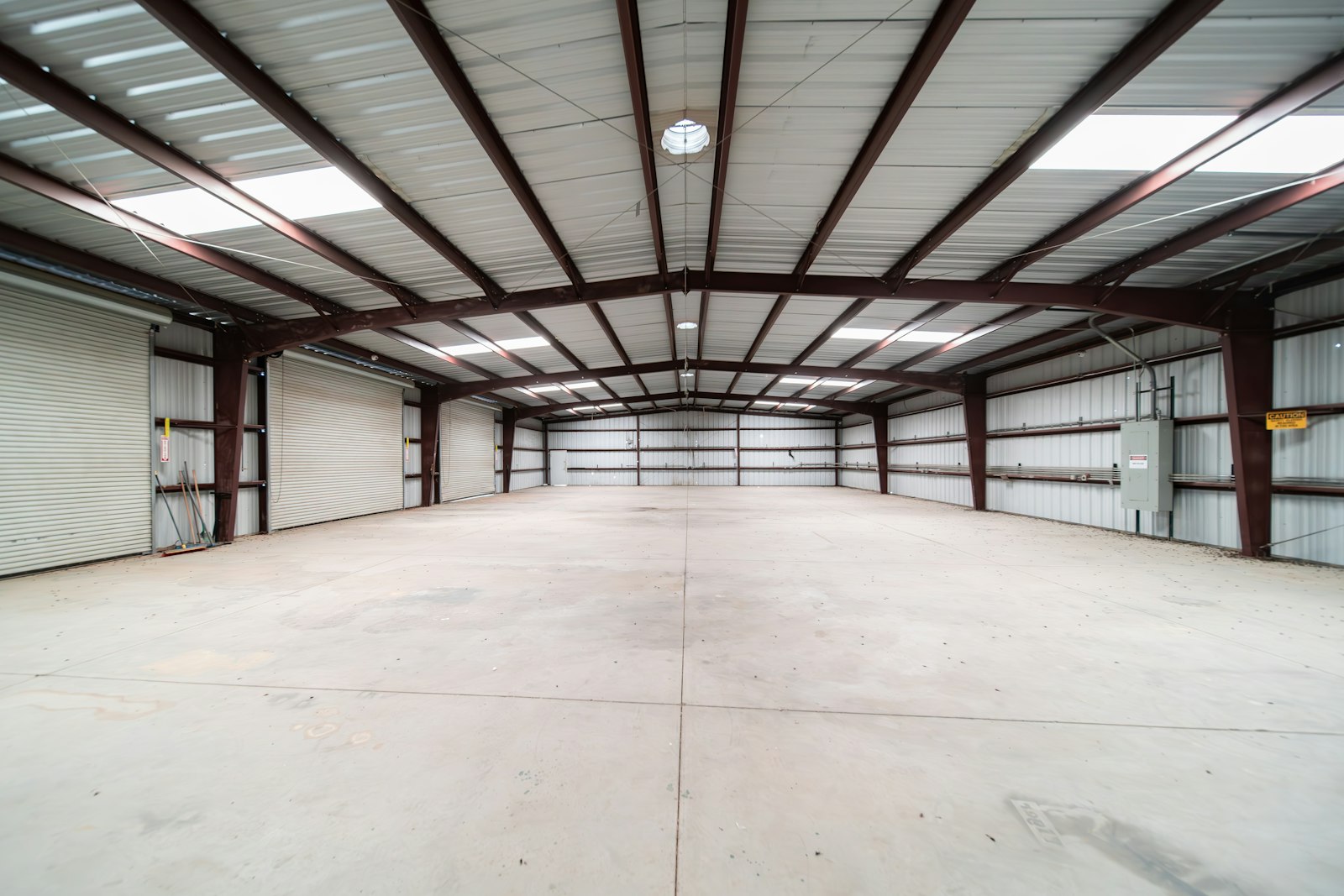
Warehouses and distribution centers. The original application and still the strongest one. Forklift traffic, pallet jacks, and constant rolling loads punish floors with seams or adhesive layers. A polished slab has neither.
Manufacturing and industrial facilities. Same reasoning. The floor takes abuse and the aesthetic expectations are practical.
Retail and showrooms. Where an open industrial look suits the brand, polished concrete delivers it without a separate finish material, and it handles cart traffic and foot volume well.
Schools and universities. Corridors, commons, cafeterias, and back of house. Long holding periods make the no-replacement-cycle argument particularly strong in educational buildings.
Offices and corporate interiors. Where the design intent is minimal and the slab is new and sound.
Service corridors and back of house in buildings that use other finishes in their public spaces. Many projects run polished concrete behind the scenes and something else out front.
Where polished concrete is the wrong answer
Being straight about this matters more than selling it everywhere.
When the slab is in poor condition. If repair and preparation costs exceed what you save by not installing a finish material, the economics collapse. An honest slab assessment early prevents an expensive surprise.
When the design needs specific color and pattern. Polished concrete reveals what is in the slab. Dyes and stains shift the tone and grinding depth controls aggregate exposure, but the result is inherently variable. Placement variations, trowel marks, and repairs remain visible in the finished floor. When a project calls for brand colors, intricate patterns, or inlaid logos, terrazzo offers design control that polished concrete cannot match.
When acoustics or comfort underfoot are priorities. Hard, reflective surfaces increase reverberation. In spaces where quiet or softness matters, such as open offices, patient rooms, or classrooms, resilient flooring or carpet usually serves better.
When the building needs the floor finished quickly in a tight window. Polishing is a multi-step mechanical process across the whole floor area, and each additional level of refinement is another pass.
Matching the finish to the space
Polished concrete is not one finish. Aggregate exposure is classified A, B, or C depending on how much stone the grind reveals, and finished appearance runs from level 1 through level 4, from flat or ground through satin, polished, and highly polished.
A warehouse and a retail showroom should not receive the same specification. Lower gloss hides wear and takes fewer passes. Higher gloss reads as more finished and reflects more light, which can be an advantage in spaces with limited daylight and a liability in spaces where every scuff will show.
The economics over a building’s life
The installed cost advantage is straightforward: there is no finish material to purchase, ship, and install.
The longer term advantage is larger. Polished concrete is refinished in place by re-polishing rather than demolished and replaced. Across a building held for decades, that removes the repeated capital cost and operational disruption of tearing out flooring every ten to twenty years.
This is why facility planners evaluate flooring on total cost of ownership rather than installed price, using tools such as the federal building life cycle cost programs maintained by the National Institute of Standards and Technology, which exist specifically to compare designs that cost more upfront but less to operate across a project’s life.
Polished concrete from David Allen Company
David Allen Company provides polished concrete as part of its specialty flooring services, alongside terrazzo, tile, stone, underlayment, and carpet and resilient flooring, for commercial, institutional, and government projects.
Because most buildings use several flooring materials, having one contractor across multiple scopes keeps transitions, sequencing, and finish quality consistent rather than split across subcontractors. On projects that pair polished concrete in back of house with terrazzo or tile in public spaces, that coordination is where a lot of problems get avoided.
Request an estimate, or explore our project portfolio.
Frequently asked questions
Is polished concrete good for commercial buildings?
Yes, in the right conditions. It performs very well under heavy and rolling traffic, costs less to install than most finish flooring, and is refinished rather than replaced. It is less suited to spaces needing specific colors and patterns or acoustic comfort.
What kind of slab can be polished?
Most sound concrete slabs can be polished. Cracks, spalling, previous coatings, adhesive residue, and flatness problems all require correction first, and a slab in poor condition may not be a good candidate once that work is priced.
Is polished concrete too slippery for commercial use?
Slip resistance depends on the finish specified and the conditions of the space. It should be specified deliberately rather than assumed, particularly in entrances and anywhere moisture is likely.
Can polished concrete be used in an office?
Yes, though acoustics deserve attention. Hard surfaces increase reverberation, so open offices using polished concrete typically address sound through ceiling treatments and wall panels rather than expecting the floor to solve it.
Polished concrete or terrazzo for a lobby?
Terrazzo generally wins in lobbies and signature spaces because it offers far greater control over color, pattern, and inlaid design. Polished concrete suits circulation, back of house, and spaces where the industrial look is the intent.