
Terrazzo polishing is the mechanical process of grinding and honing a terrazzo floor with progressively finer abrasives to restore its surface, followed by resealing. It is what brings back a floor that has gone dull despite good cleaning. Unlike replacing a floor, polishing works with the existing terrazzo and can be repeated many times over the life of a building.
There is a point where cleaning stops working. The routine is being followed, the right products are being used, and the floor still looks flat and tired. That is not a cleaning problem. It is a surface problem, and the answer is refinishing.
Understanding what that involves helps facility teams plan for it rather than discover it as an emergency.
Polishing is not cleaning, and not restoration
These three get used interchangeably, which causes confusion when scoping work.
Cleaning removes soil from the surface. Daily dust mopping and weekly damp mopping with a neutral cleaner. It maintains a floor that is fundamentally in good condition.
Polishing and refinishing address the surface itself. Mechanical abrasives cut a fresh surface, then the floor is resealed. This is periodic work, scheduled according to traffic.
Restoration is a larger intervention for floors that are damaged, neglected for years, or in need of repair as well as refinishing. It may include crack repair, patching, replacing damaged divider strips, and addressing prior bad treatment.
Most floors that look dull need refinishing, not restoration. Establishing which one you are dealing with is the first step, and it usually requires someone looking at the floor.
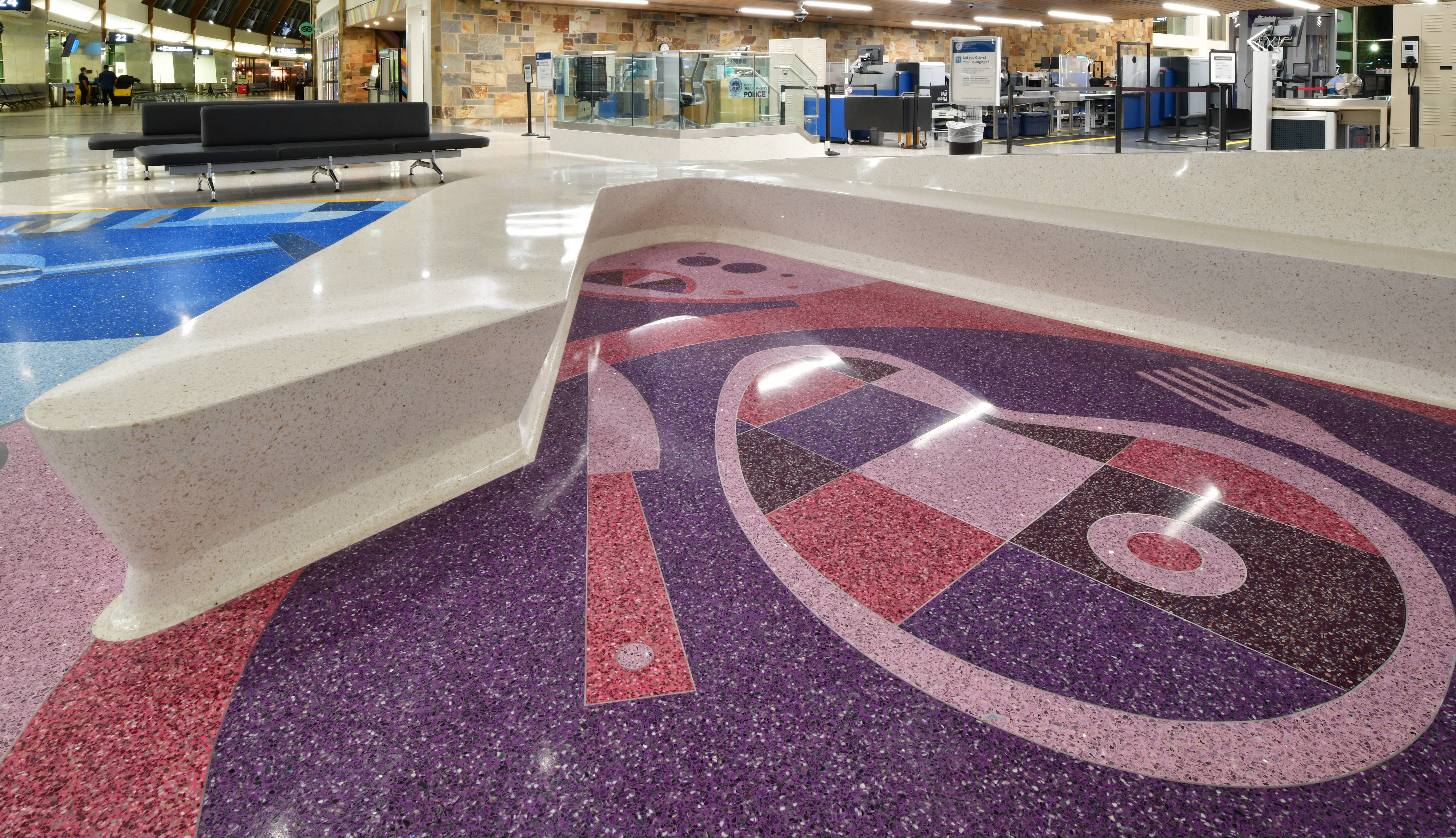
Why terrazzo can be refinished at all
This is the structural advantage of terrazzo.
A terrazzo floor is a solid material all the way through its thickness. Grinding away a small amount of the surface exposes fresh material with the same appearance as the original. That is why terrazzo installed generations ago can be brought back to its original appearance rather than replaced.
Terrazzo can go through the process many times across a building’s life.
What the refinishing process involves
The sequence mirrors the final stages of a new terrazzo installation.
Assessment. Someone evaluates the floor’s condition, the terrazzo system, existing sealer, and whether repairs are needed before refinishing. This determines the scope.
Stripping. Old sealer and any accumulated finish coats are removed so the work happens on the terrazzo itself rather than on layers sitting on top of it.
Grinding and honing. Progressively finer bonded abrasives cut and refine the surface, the same mechanical sequence the concrete polishing industry defines in its published glossary of polishing processes, where the multi-step bonded abrasive method is identified as producing the most durable finish with the least maintenance. How aggressive the initial cut needs to be depends on the floor’s condition. A floor being refreshed needs far less material removed than one that has been neglected or damaged.
Grouting, if required. Grinding can open small pinholes. Where that happens, a matching grout fills them so the surface is dense and continuous.
Polishing to the specified finish. Finer abrasives bring the floor to the intended level of sheen.
Sealing. A sealer appropriate to the terrazzo system is applied. The National Terrazzo and Mosaic Association recommends sealer be applied immediately following final polishing, and publishes guidance on maintenance and sealers for both new and existing floors.
When does a terrazzo floor need refinishing?
There is no fixed interval, because traffic drives everything. A main entrance and a back corridor in the same building will be on entirely different schedules.
Signs a floor is ready:
● Dullness that cleaning does not fix. The clearest indicator. If the routine is correct and the floor still looks flat, the surface needs attention.
● Visible wear paths. Traffic lanes that look different from adjacent areas mean the sealer has worn through where it matters most.
● Staining that will not clean up. Once the sealer is gone, spills reach the terrazzo itself.
● Loss of protection. Water that used to bead now soaks in.
The practical approach is to inspect high-traffic areas regularly and plan the work before appearance degrades noticeably. Refinishing on a schedule costs less than restoring a floor that has been running unprotected.
Refinishing in an occupied building
Most terrazzo refinishing happens in buildings that cannot close. That is a scheduling problem more than a technical one.
The work is typically phased by area, often during off-hours, with containment for dust and equipment noise. Sections are taken out of service in sequence rather than all at once. In hospitals, airports, and schools this coordination is usually the largest planning consideration, more than the refinishing itself.
Discuss it early with whoever performs the work, because the phasing plan affects both cost and duration substantially.
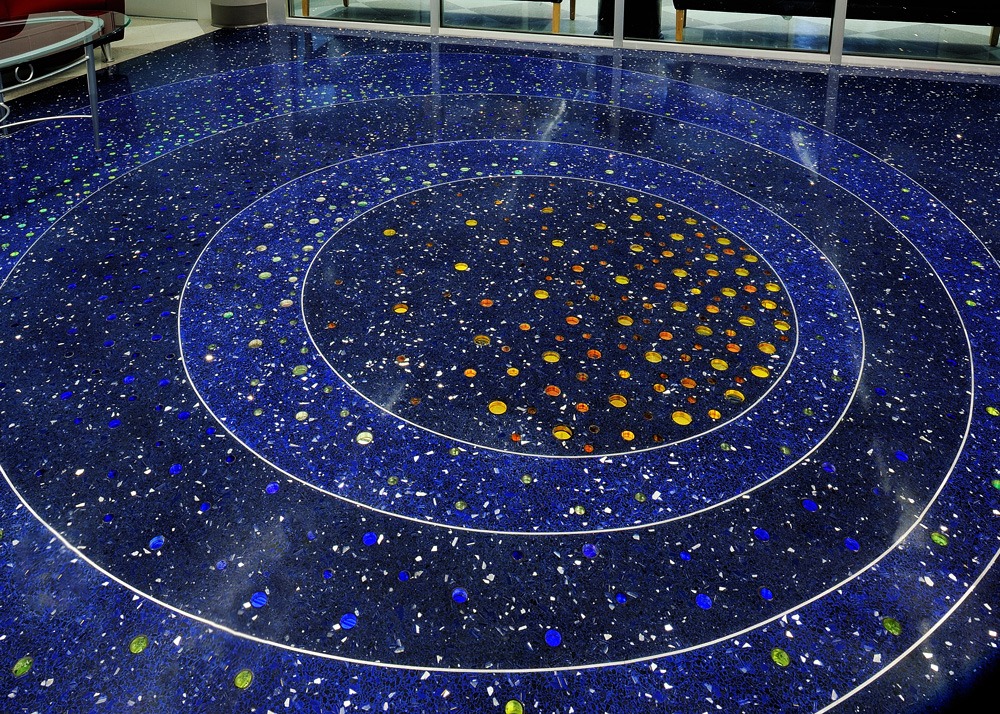
Does refinishing change how the floor looks?
It restores rather than changes it. Because terrazzo is solid material, grinding exposes the same aggregate and matrix as the original surface. The floor comes back looking as it did, not different.
The level of sheen can be specified, so a floor can be brought back to its original finish or to a different gloss level if the facility prefers. That is worth deciding deliberately rather than defaulting to whatever the crew normally does.
Frequently asked questions
How often does terrazzo need to be polished?
There is no universal interval. It depends on traffic, the terrazzo system, and how well routine maintenance has been kept up. High-traffic entrances need attention far more often than low-traffic areas. Plan by monitoring condition rather than by the calendar.
What is the difference between polishing and restoring terrazzo?
Polishing and refinishing address the surface of a floor that is fundamentally sound. Restoration is a larger intervention for floors that are damaged or badly neglected and may need crack repair, patching, or divider strip work in addition to refinishing.
Can a dull terrazzo floor be brought back?
Yes. Dullness usually means the sealer has worn or the surface needs refinishing. Grinding and re-polishing exposes fresh material and restores the original appearance.
How many times can terrazzo be refinished?
Many times over the life of a building. Terrazzo is solid material rather than a wear layer, so each refinishing removes only a small amount of thickness.
Can terrazzo be polished while a building stays open?
Yes. The work is normally phased by area, often during off-hours, with dust containment. Coordination is usually the main planning consideration in occupied buildings.