
Polished concrete is specified along two independent scales. Aggregate exposure (classes A, B, and C) describes how much stone the grinding reveals, from cement fines at the surface to coarse aggregate. Appearance, or gloss, runs in four levels from flat through highly polished. A complete specification names both, because one does not determine the other.
This is the most common source of disappointment on polished concrete projects. An owner approves a glossy sample full of exposed stone, the specification says only “polished concrete,” and the finished floor looks nothing like what they remember.
The two scales are separable. You can have a highly polished floor with almost no stone showing, or a heavily exposed aggregate floor with a flat, matte finish.
Aggregate exposure: how deep the grind goes
Aggregate exposure is a function of how much material the grinding passes remove. Remove very little and you are polishing the cement fines at the top of the slab. Remove more and you cut into the sand, then into the coarse stone in the mix.
The Concrete Polishing Council’s aggregate exposure chart defines three classes by what percentage of the surface each element occupies:
| Class | Composition at the surface | Visual character |
|---|---|---|
| A | 85 to 95 percent cement fines, 5 to 15 percent fine aggregate | Smoothest and most uniform, closest to the slab as placed |
| B | 85 to 95 percent fine aggregate, 5 to 15 percent a blend of cement fines and coarse aggregate | Subtle speckle, salt and pepper |
| C | 80 to 90 percent coarse aggregate, 10 to 20 percent a blend of cement fines and fine aggregate | Boldest and most stone-dominant, closer to terrazzo |
Note that these are percentages of the finished surface, not grind depths. The deeper the cut, the more coarse aggregate the surface shows.
The practical constraint is the slab itself. The grinder can only expose aggregate that is actually there, at the depth it happens to sit. If the coarse stone settled low, reaching class C means removing a lot of material and may not be realistic at all.
This is why a mock-up on the actual slab matters more than a sample from another building. The American Society of Concrete Contractors’ Concrete Polishing Council publishes technical documents and position statements on this kind of coordination, including the items that need to be settled before anyone starts grinding.
Gloss levels: how reflective the surface is
Gloss is a separate decision, made by how far the polishing sequence continues after the aggregate exposure is set.
The Council’s appearance chart defines four levels, each with measurable distinctness-of-image and gloss ranges rather than adjectives alone:
| Level | Name | Appearance | DOI | Gloss | Where it fits |
|---|---|---|---|---|---|
| 1 | Exposed / Flat (Ground) | Reflected images look flat or matte | 0 to 9 | Below 10 | Warehouses, utility spaces, back of house |
| 2 | Exposed / Satin (Honed) | Reflected images have a satin appearance | 10 to 39 | 5 to 25 | Service corridors, heavy traffic areas |
| 3 | Polished | Reflected objects are identifiable but not sharp | 40 to 69 | Above 35 | Retail and offices |
| 4 | Highly Polished | Reflections are sharp and crisp, near mirror | Above 70 | Above 50 | Showrooms and feature retail |
Haze index below 12 applies at every level. Level 4 may require grouting.
The measurable ranges are what make these levels worth specifying. “Highly polished” is an opinion. A distinctness-of-image value above 70 is a number a floor either meets or does not.
Each level is another set of passes with progressively finer diamond abrasives, so gloss carries cost. It also carries maintenance consequences. A level 4 floor shows scuffs, scratches, and traffic patterns that a level 2 floor hides. In a high-volume space, a lower gloss often looks better a year in than a higher gloss nobody is maintaining to the standard it needs.
Why both scales belong in the specification
Consider two floors that both read as “polished concrete”:
- Class A, level 4. Highly reflective, nearly uniform gray, almost no visible stone.
- Class C, level 2. Heavy coarse aggregate across the whole surface, matte finish.
Nothing about these floors looks alike, and both are correctly described by the phrase “polished concrete.” That is the problem.
A usable specification names the aggregate exposure class, the appearance level, any dye or stain, the approach to joints and cracks, and the mock-up requirement. The Concrete Polishing Council’s charts exist so that these terms mean the same thing to the designer, the owner, and the contractor rather than three different things.
There is a live debate about whether appearance levels alone go far enough. A 2025 article in The Construction Specifier, Refine versus shine, argues that because the levels measure reflected light rather than the physical condition of the floor, a gloss-only specification can be satisfied by a coating or a grind-and-seal finish, leaving the owner no contractual basis to reject it.
The takeaway is the same either way: name the appearance level, and also name the process. A specification calling for bonded abrasive polished concrete to a stated appearance level is much harder to satisfy with something else.
What a polished finish will not hide
Polished concrete reveals the slab. That is the appeal, and it is also the limit.
Trowel marks, placement variations, color differences between pours, patches, repairs, saw cuts, and anything spilled on the slab during construction remain visible in the finished floor. Grinding reduces some of this and eliminates very little of it.
The most effective protection is sequencing: keep the slab covered through the rest of construction, and keep other trades from staining, cutting, or anchoring into it. That is a project management problem, and it is almost always cheaper than remediation.
Matching the finish to the space
Some rules of thumb:
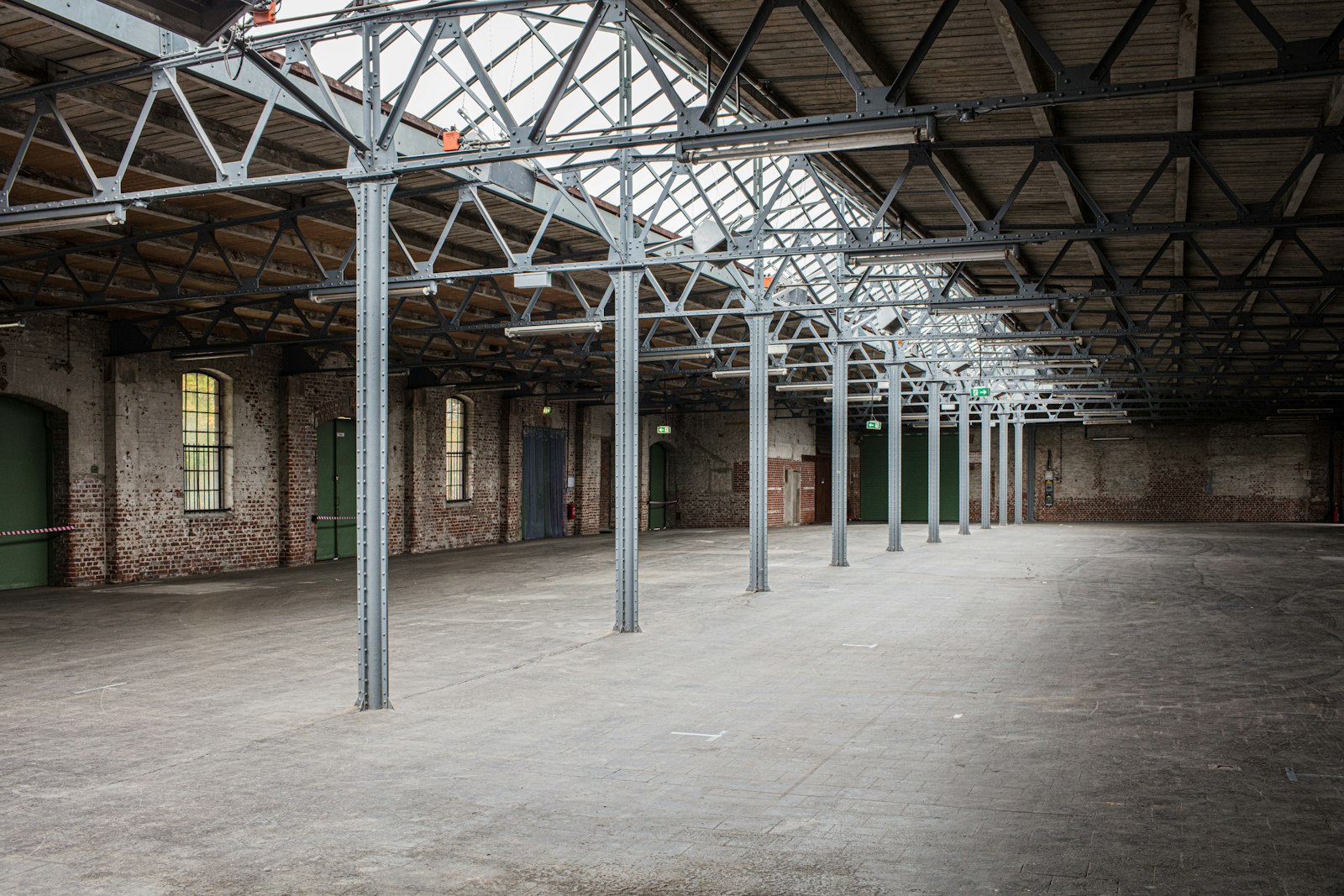
- Warehouse and distribution. Class A or B, level 1 or 2. Durability matters; appearance does not.
- Institutional service corridors and support spaces. Class B, level 2. Refined enough to read as finished, low enough gloss to tolerate heavy traffic.
- Retail and showrooms. Class B or C, level 3.
- Offices. Class A or B, level 2 or 3, with acoustics addressed elsewhere in the space.
- Feature and signature spaces. Often where polished concrete is the wrong answer. If the floor has to deliver a specific color, pattern, or inlaid design, terrazzo, tile, and natural stone offer control that polished concrete cannot.
Specification and life cycle
Higher gloss costs more to install and more to maintain. Deeper aggregate exposure costs more to install and depends on whether the slab cooperates.
Both decisions are worth making against the building’s expected life rather than its construction budget alone, the reasoning behind tools such as the building life cycle cost programs from the National Institute of Standards and Technology. A floor specified for the maintenance the owner will actually fund outperforms a floor specified for the photograph.
Polished concrete from David Allen Company
David Allen Company provides polished concrete alongside terrazzo, tile, stone, underlayment, and carpet and resilient flooring for commercial, institutional, and government projects. Because most commercial buildings use several flooring materials, one specialty flooring contractor across multiple scopes keeps transitions, sequencing, and finish quality consistent. On a project running polished concrete in service areas and terrazzo in public spaces, that coordination is where finish-level mismatches get caught before they are permanent.
Request an estimate, or explore our project portfolio.
Frequently asked questions
What are the levels of polished concrete?
Appearance is specified in four levels: level 1 (exposed/flat, or ground), level 2 (exposed/satin, or honed), level 3 (polished), and level 4 (highly polished), each with a defined distinctness-of-image and gloss range. Aggregate exposure is specified separately in classes A, B, and C.
What is the difference between aggregate exposure and gloss?
Aggregate exposure describes how much stone the grinding reveals and is set by how much material is removed. Gloss describes how reflective the surface is and is set by how far the polishing sequence continues. They are independent.
Which polished concrete finish is best for a warehouse?
Typically a low aggregate exposure class with a level 1 or 2 gloss. The floor needs durability and simple maintenance, and low gloss hides wear far better than high gloss.
Can you get exposed aggregate on any slab?
No. The grind can only reveal aggregate that is present at the depth being cut. A slab whose coarse stone settled low, or that has a thick surface layer of cement fines, may not reach class C at any reasonable grind depth.
Does a higher gloss polished concrete floor need more maintenance?
Yes. Higher gloss shows scuffs, scratches, and traffic patterns more readily, so it requires more consistent maintenance to keep looking the way it did at handover.